
Field codes IN KNFLAMPKT | OUT WIFLAMPKT | API flashPoint | Max Length 5 | Decimals 2
Definition
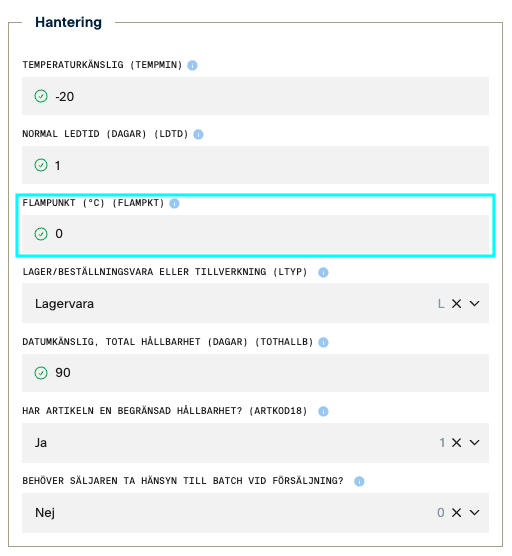
Flash Point is the temperature (in °C) at which a liquid emits vapor in a concentration that can ignite.
Explanation
The flash point indicates how flammable a liquid is. The lower the flash point, the more flammable the product. This information is mandatory if the product is subject to applicable regulations for flammable goods.
The flash point is also used to determine the fire classification of a flammable liquid. Flammable liquids are divided into four classes depending on their flash point (see table below). The classification forms the basis for calculations and assessments of the quantities that may be stored or sold under permits for flammable goods, for example in warehouses or retail areas.
Classification of Flammable Liquids
Flammable liquids are divided into four classes depending on their flash point.
|
Class |
Flash Point |
Example |
|---|---|---|
|
1 |
<21°C |
Petrol, acetone, methylated spirits |
|
2a |
21°-30°C |
Xylene |
|
2b |
30°-55°C |
Kerosene, lighter fluid, turpentine, oil-based paint |
|
3 |
55°-100°C |
Diesel, heating oil |
It is important to note that a flammable liquid can ignite below its flash point, for example, if it is sprayed into mist form from a leaking seal or hydraulic hose.
A wick, cloth, or piece of waste material soaked with the liquid can also change the conditions, allowing ignition below the flash point.
Usage
The supplier specifies the flash point in degrees Celsius. The information is mandatory when the product is subject to regulations for flammable goods.
Finfo does not perform any specific processing of this field.
Recipients may use the flash point as a basis for classification, risk assessment, and calculations related to permits for flammable goods.